Your website is often the first impression potential customers have of your business. If it looks outdated, loads slowly, or is difficult to navigate, visitors may leave before learning about your products or services.
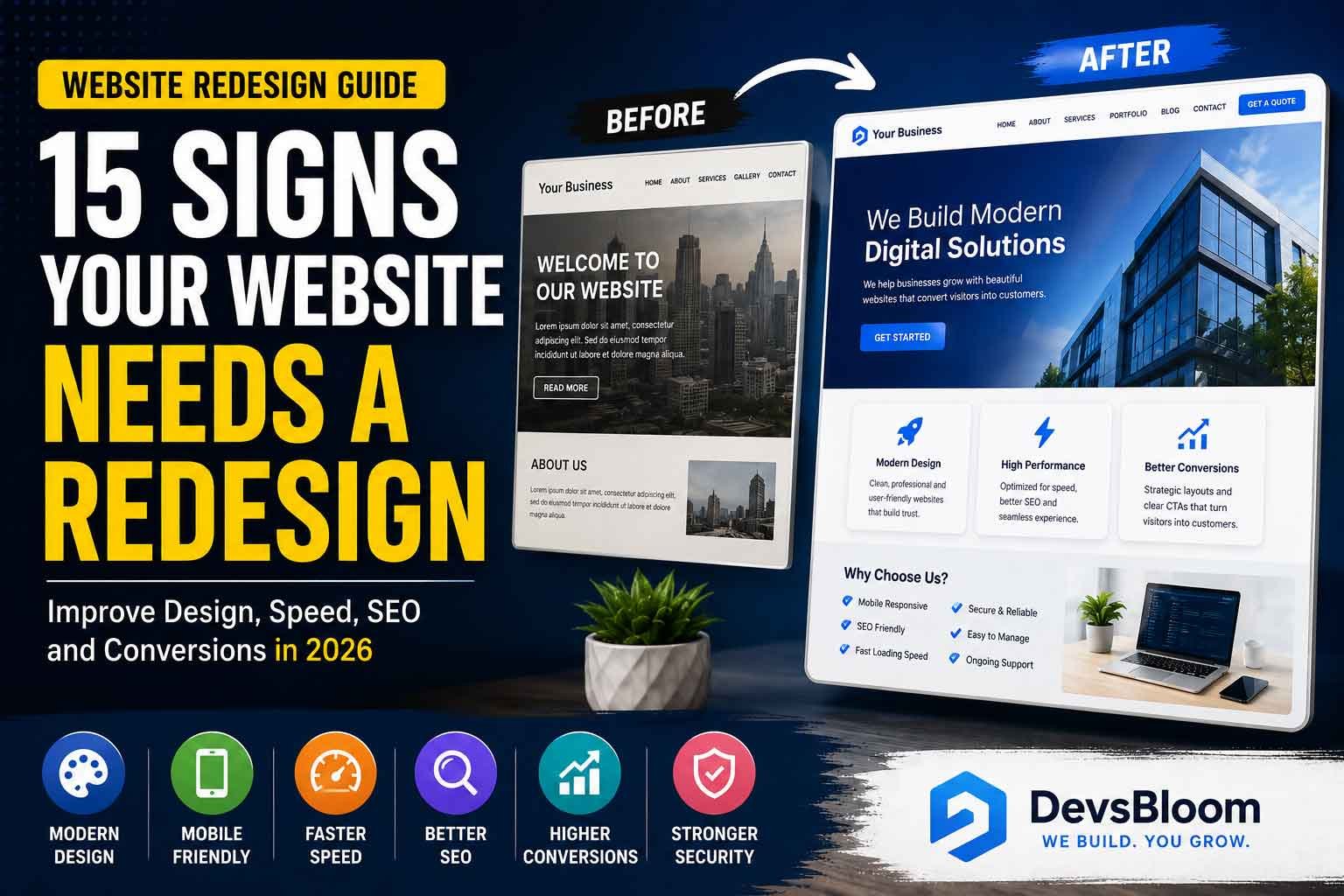
A website redesign isn’t just about making your site look better. It’s an opportunity to improve performance, strengthen your brand, enhance user experience, and increase conversions.
In this guide, we’ll explore 15 clear signs that it’s time to redesign your website and explain how a modern redesign can help your business grow in 2026.
Why Website Redesign Matters
A professionally redesigned website can:
- Improve user experience
- Increase search engine rankings
- Load faster
- Generate more leads
- Increase customer trust
- Improve mobile usability
- Strengthen your brand identity
- Boost conversion rates
Your website should evolve as your business grows.
15 Signs Your Website Needs a Redesign
1. Your Website Looks Outdated
Design trends change over time. If your website still looks like it was built many years ago, visitors may question your professionalism.
A modern, clean design helps build trust and encourages users to explore your website.
2. It Isn’t Mobile Friendly
Most website visitors now browse using smartphones or tablets.
If your website isn’t responsive, users may struggle to navigate, resulting in lost opportunities and lower search rankings.
3. Your Website Loads Slowly
Slow-loading pages frustrate visitors and negatively impact SEO.
A redesign provides an opportunity to optimize images, remove unnecessary code, improve hosting, and increase overall performance.
4. Your Branding Has Changed
If you’ve updated your logo, colors, messaging, or services but your website still reflects your old brand, it’s time for a redesign.
Consistency builds trust and reinforces your brand identity.
5. Navigation Is Confusing
Visitors should find important information within a few clicks.
A redesign can simplify menus, improve page structure, and create a more intuitive browsing experience.
6. Low Conversion Rates
If visitors aren’t contacting you, requesting quotes, or making purchases, poor design may be one of the reasons.
A redesigned website can improve call-to-action placement, page layouts, and lead generation.
7. Your Website Isn’t SEO Friendly
Older websites often lack proper heading structures, optimized metadata, and fast loading speeds.
A redesign allows you to implement modern SEO best practices.
8. Content Is Difficult to Update
If updating your website requires technical expertise, it may be time to move to a more flexible platform such as WordPress.
Easy content management saves time and reduces maintenance costs.
9. Your Competitors Have Better Websites
Compare your website with competitors in your industry.
If their websites look more professional and provide a better experience, you may be losing potential customers.
10. Poor User Experience
Visitors should be able to complete tasks quickly.
Complicated layouts, inconsistent design, and cluttered pages often drive users away.
11. Broken Links and Outdated Content
Broken pages, outdated information, and missing images reduce credibility.
A redesign provides an opportunity to refresh your content and improve accuracy.
12. Security Concerns
Older websites often use outdated software, making them more vulnerable to attacks.
A redesign should include updated security measures, SSL, and current software versions.
13. Your Website Doesn’t Reflect Your Business Growth
Businesses evolve over time.
If you’ve added new services, expanded your team, or entered new markets, your website should reflect those changes.
14. Poor Accessibility
Modern websites should be accessible to all users, including those using assistive technologies.
Improving accessibility also enhances usability and demonstrates inclusivity.
15. You’re Embarrassed to Share Your Website
If you hesitate to send your website link to potential clients because it no longer represents your business, that’s a strong sign it’s time for a redesign.
Benefits of a Website Redesign
A successful redesign can provide:
- Faster loading times
- Improved SEO
- Better mobile responsiveness
- Increased conversions
- Higher engagement
- Stronger branding
- Easier website management
- Better security
- Future scalability
A redesign is an investment in your business’s long-term success.
Common Website Redesign Mistakes
Avoid these common pitfalls:
- Redesigning without clear goals
- Ignoring SEO during migration
- Removing valuable content
- Changing URLs without redirects
- Overcomplicating the design
- Forgetting mobile optimization
- Skipping speed testing
- Launching without quality assurance
Planning carefully helps ensure a smooth redesign process.
Website Redesign Checklist
Before launching your new website, make sure you’ve:
- Backed up the existing website
- Improved page speed
- Optimized for mobile devices
- Reviewed all content
- Updated branding
- Tested contact forms
- Checked internal links
- Added SEO metadata
- Installed analytics
- Tested across multiple browsers
Following a checklist reduces the risk of post-launch issues.
When Is the Best Time to Redesign?
There’s no perfect schedule, but many businesses redesign their websites every 3 to 5 years or sooner if significant changes occur.
You should also consider a redesign if:
- Your business has grown
- Search rankings are declining
- Conversion rates are dropping
- Technology has become outdated
- Your audience’s expectations have changed
Final Thoughts
Your website is one of your most valuable digital assets. An outdated or underperforming site can limit your business growth, while a well-planned redesign can improve user experience, strengthen your brand, and generate more leads.
A successful website redesign goes beyond appearance. It combines modern design, strong performance, SEO best practices, and a user-focused experience to help your business succeed online.
If you’re considering redesigning your website, DevsBloom specializes in creating fast, responsive, SEO-friendly WordPress websites tailored to your business goals.